BHS Newsletter: Vol. 1, No. 1 (November 2025 - April 2026)
President’s Message
Hello there, Bunker Hill Members!
The next few months will be very exciting. We plan to have another ZOOM meeting for everyone on March 28th. Details for this are forthcoming.
Also, we will have a membership Tea in Washington, DC the afternoon of April 14, 2026 at the Army Navy Club. Thanks to our tireless staff for doing all the footwork!
This is our first appearance in DC’s' Hereditary Fortnight with other hereditary societies and promises tobe quite interesting! Formal invitations are to follow.
Enjoy the newsletter...
Dr. Peter L. Sheerin
President, Bunker Hill Society
Happy 250th Birthdays!
Revolutionary Events:
November 10, 1775: U.S. Marine Corps Established
November 19-21, 1775: First Siege of Ninety-Six, SC
December 9, 1775: Battle of Great Bridge, VA
December 22, 1775: Battle of Great Canebreak, SC
December 30, 1775-January 1, 1776: Battle of Quebec
January 10, 1776: Thomas Paine published Common Sense
February 27, 1776: Battle of Moore’s Creek Bridge, NC
March 3, 1776: Continental Navy captures New Providence Island, Bahamas
March 17, 1776: British evacuate Boston
250 Anniversary
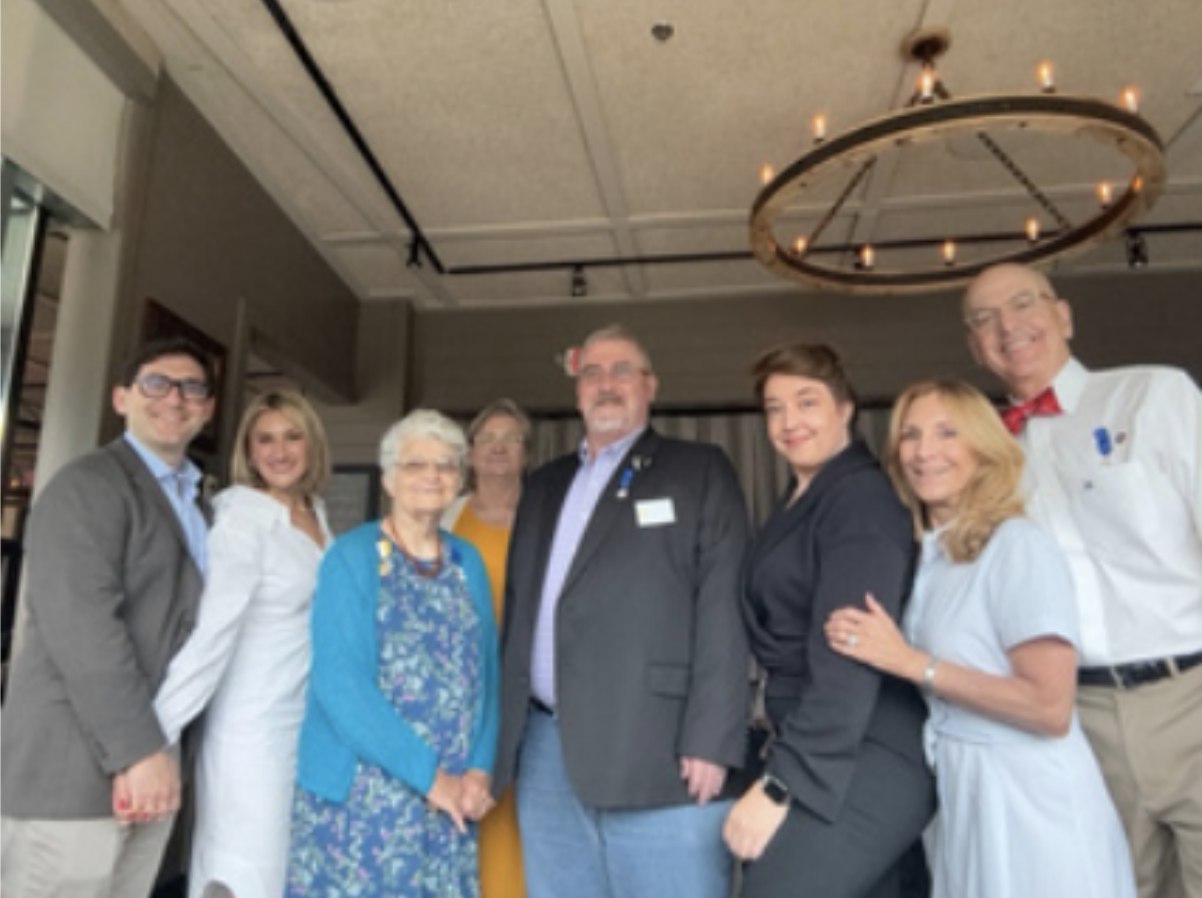
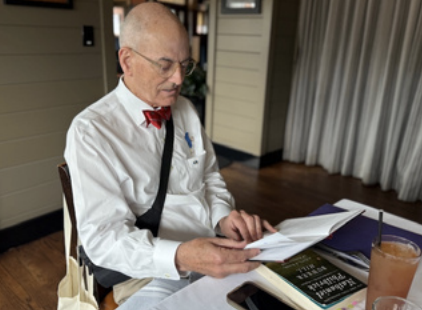
Members of the Bunker Hill Society met in Boston, MA, on June 17 to join in the 250 festivities. We had a delicious lunch at the Blackmoor Bar and Kitchen with lively conversations and discussions. President Peter Sheerin read passages from Bunker Hill by Nathaniel Philbrook and some passages from a letter written by General Israel Putnam’s son and Aide-decamp, Colonel Daniel Putnam. This set the tone for our walk up to the monument. Walking along the brick sidewalks was suggestive of the cobblestone pavers of 1775.
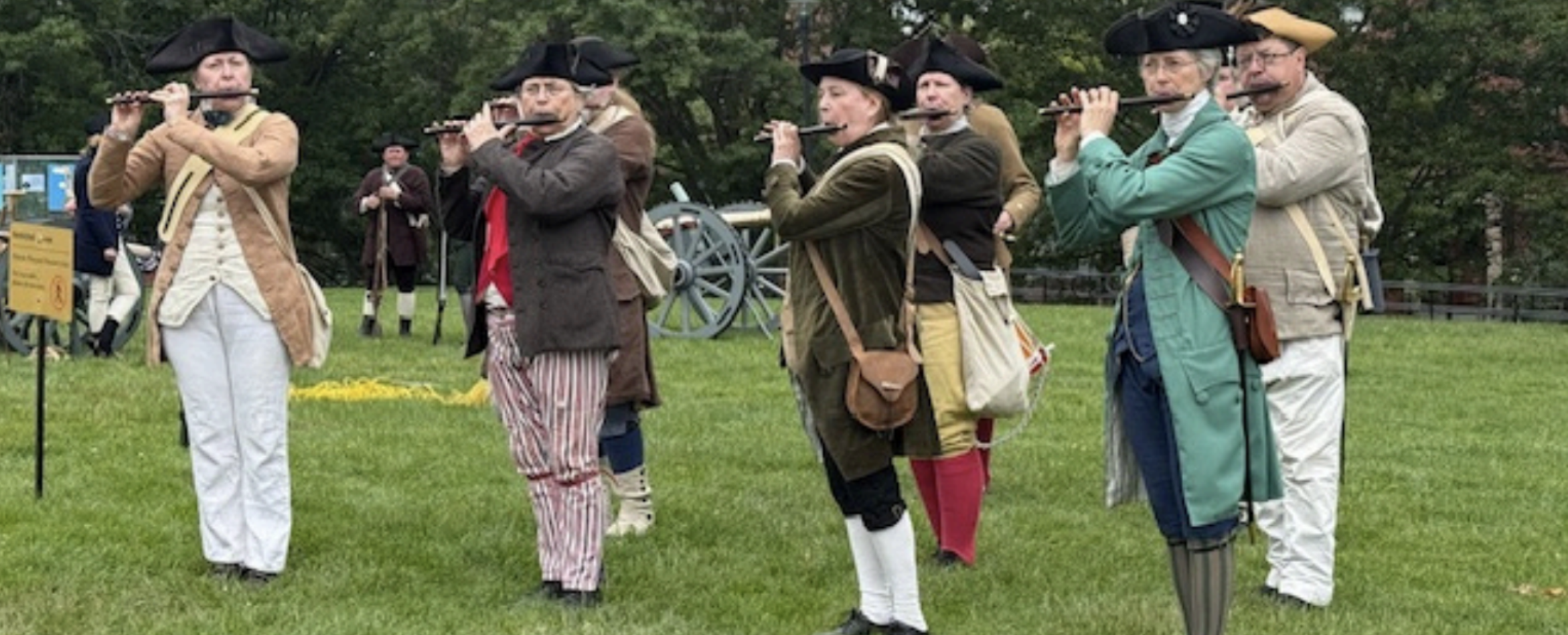
The monument rose above us as we climbed the stairs to the accompaniment of a fife and drum colonial band. The museum gave us a glimpse of history and an entrance to the monument stairway. Four of our party – the Sheerin family attempted it. Todd and Sophia actually reached the top and took photos for those of us not hardy enough to survive the long stairway.
Under the tent we heard words by several dignitaries and Nicholas Philbrook took the floor. His short, but enjoyable presentation was soon followed by the Consul General from the British Embassy. The key note speaker was Brigadier General Ralph J. Rizzo, Jr., who spoke of Centuries of Service. And then it rained.
The SAR Color Guards from New Hampshire, Massachusetts and Connecticut managed to keep their powder dry for a 21-gun salute. We parted in the light drizzle to our awaiting Ubers and Lyfts and back to our lodgings. The concert on the Esplanade was cancelled due to the weather, but we had a really good day.
Thank you to all who attended and celebrated with us.
Mary Brown
-
Brackenridge, Hugh Henry. Battle of Bunkers-Hill (2020)
Burgan, Michael. The Battle of Bunker Hill (2008)
Doyle, Peter Reese. The Battle of Bunker Hill (2021)
Ellis, George. The History of Bunker’s (Breed’s) Hill (2020)
Fleming, Thomas. Now We Are Enemies: The Story of Bunker Hill (2010)
Fleming, Thomas. Bunker Hill (2016)
Holmes, Oliver Wendell and Howard Pyle. Grandmother’s Story of Bunker Hill Battle as She Saw it from the Belfry (2012)
Hourly History. The Battle of Bunker Hill: A History from Beginning to End (2020)
Ketchum, Richard M. Decisive Day: The Battle for Bunker Hill (2024)
Lockhart, Paul. The Whites of Their Eyes: Bunker Hill, the First American Army, and the Emergence of George Washington (2011)
Nelson, James L. With Fire and Sword: The Battle of Bunker Hill and the Beginning of the American Revolution (2024)
Parker, Francis J. Colonel William Prescott: The Commander in the Battle of Bunker’s Hill, Honor to Whom Honor is Due (2018)
Philbrick, Nathaniel. Bunker Hill: A City, A Siege, a Revolution (2014)
Pulsifer, David. An Account of the Battle of Bunker Hill: Complied from Authentic Sources, General Burgoyne’s Account of the Battle (2017)
Putnam, Alfred Porter. General Israel Putnam and the Battle of Bunker Hill: A Critique, Not a History (2016)
Rose, Ben Z. John Stark: Maverick General (2007)
Ryan, Donald R. Colonel William Prescott: Heroic Commander of the Battle of Bunker Hill (2025)
Stockwell-Moniz, Marc Jesse. Fog On the Hill: General Gage Here We Are Come Get Us--The Battle of Bunker Hill (2021)
Swett, Samuel. History of Bunker Hill Battle: With a Plan (2022)
Member Publication:
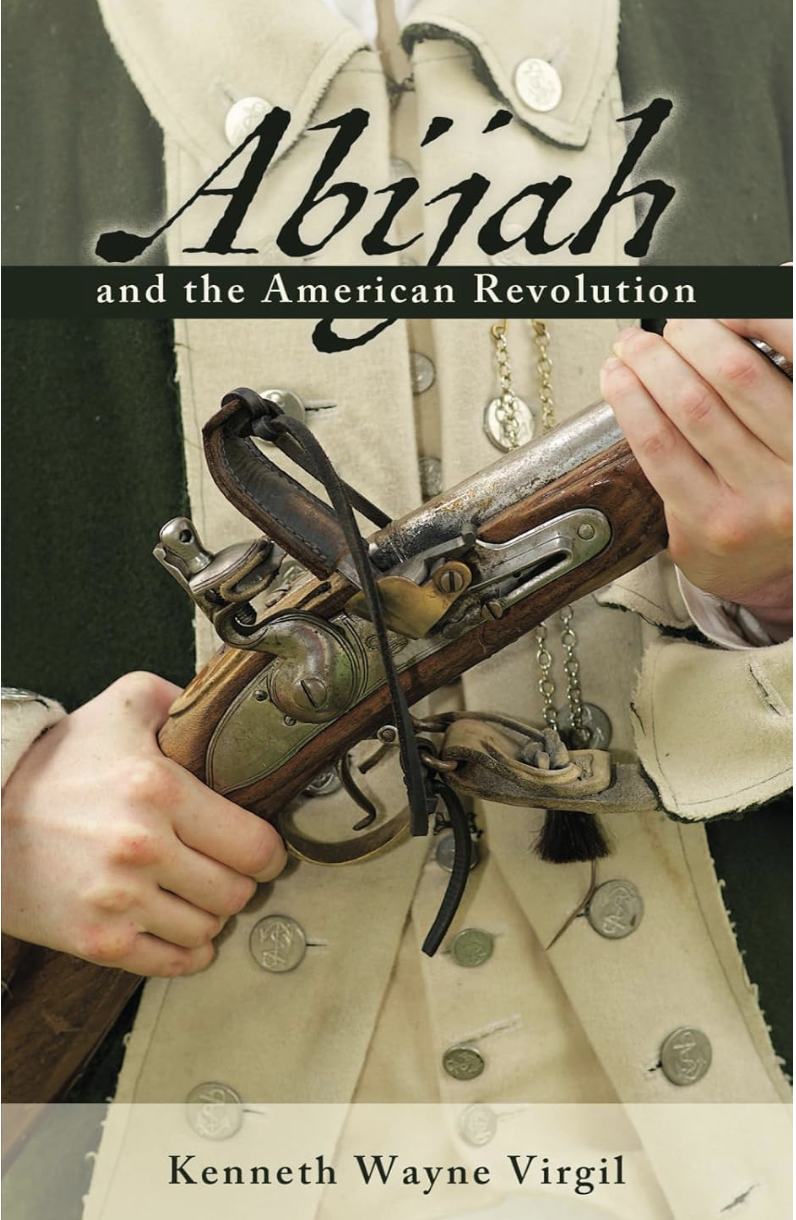
Sixteen-year-old Abijah Virgil has always been content with his provincial life, concerning himself with little beyond the farm work that keeps his family afloat. But when the first shots of the American Revolution are fired, he leaves the quiet fields of colonial New York to join the Continental Army. Abijah survives numerous battles only to be captured during a mission to destroy enemy supplies. As many of his fellow prisoners succumb to disease and harsh winters, he clings to the hope that he and his fledgling country will one day be free. Evoking an idealism that survives the horror of war, Abijah and the American Revolution highlight the everyday struggles and quiet acts of courage often overshadowed by grand historical narratives.
Dispatches
The Pennsylvania Gazette
Wed., Jun 28, 1775, Page 3
Extract of a Letter from Wethersfield, June 22
“Before this you must know (I conclude) that there has been a battle, in which fell the honorable, the noble Dr. Warren.
For fear you many not have the particulars, I will endeavor in part to related to you how the affair was, according to the best accounts I can gather by letters from the camp. Last Friday afternoon orders were issued for about 1800 of the provincial troops, and 200 of the Connecticut, to parade themselves at six o’clock, with one day’s provision, equipped with packs, blankets, & c. Their orders were given at 9 o’clock, and they marched with their teams, trenching tools, & c. on Bunker’s Hill, to heave up an entrenchment, which you are sensible is near the water, ships, & c. They worked most surprisingly that night, and were discovered at sunrise by a sailor from the mast-head. The British army began a heavy fire from Cop’s Hill, near Cutler’s Church, in Boston, and from all the ships which could be brought to play, which continued till near night.
About 1 o’clock, A.M. the Americans at Cambridge heard that the regulars were landing from their floating-batteries, the alarm was founded, and they were ordered down to the breast-work at Charlestown; and Capt. Chester writes me, that before it was possible for him to get there, the battle had begun in earnest, and cannon and musket balls were plenty about their ears. Chester and my brother were both in the engagement. They reinforced our men that had left the breast-work in fine order, tho’ they passed thro’ the cannonading of the ships, bombs, chain-shot, ring-shot, & c, but then their superior number of artillery and men, for they were three to two, forced our men to retreat, after a warm engagement of an hour and a half. Thank Heaven, but few of our men fell, considering the advantages they had over us, our men being much fatigued with working at the entrenchments, and I believe not in the best preparation to meet an enemy. The British troops, to their eternal disgrace, shame and barbarity, set Charlestown on fire with torches.
My brother says we were obliged to retreat to Prospect Hill (alias Winter-Hill) where we made a stand, and declared we would all die, before we would retreat any further; but the British troops did not think fit to come out from under the protection of their shipping. The loss of Americans is supposed to be, of wounded, missing and slain, about 120. A large, genteel, well dressed Gentleman, who first mounted our breast-work, was over set by one of our impudent Americans, who took so good aim as to prevent his every mounting another, as he tumbled him into the entrenchment just as he cried, ‘The day is our own.’ We greatly rejoice to hear of the coming of the good, the brave and great General Washington, and shall receive him with open arms.”
Editor Notes:
Wethersfield, founded in 1633-34, is located in Hartford County, CT., south of Hartford along the Connecticut River.
Jun 22, 1775 was a Thursday.
Cutler’s Church is also referred to as the Old North Church in Boston.
Captain John Chester (1749-1809) from Connecticut.
Letter from the Front
A letter written by Private Peter Brown to his mother, Sarah Brown, in Newport, Rhode Island on 25 June 1775. In the letter, Private Brown, who came from Westford, Massachusetts, shares his thoughts and observations as a soldier who served under Colonel William Prescott.
Peter Brown, a company clerk "hearty in the cause," fought with Col. Prescott in the redoubt at Bunker Hill, gives us the fullest account that survives of the feelings and observations of a participant in the ranks. Private Brown's account includes his orders of 16 June. He writes to his mother about the dawning realization of the danger the Americans are in as they build the fort and breastworks, with "all Boston fortified against us". He depicts the unfolding of events as the British begin their bombardment from Boston and from the ships in the harbor, and then he describes the attack on the redoubt as the British troops are ferried over to Charlestown.
“Friday the 16 of June we were ordered to parade at six 'o Clock, with one days provision and Blankets ready for a March somewhere, but we knew not where but we readily and cheerfully obeyed the whole that were called for, were these three Colonels Prescott’s, Fry’s, and Nixon’s Regiments -- after tarrying on parade till Nine at Night, we marched down, on to Charleston Hill against Copp’s hill in Boston, where we entrenched & made a Fort, ten Rod long, and eight wide, with a Breastwork of about eight more, we worked there undiscovered till about five in the Morning, then we saw our danger, being against Ships of the Line, and all Boston fortified against us, The danger we were in made us think there was treachery and that we were brought there to be all slain, and I must and will say that there was treachery oversight or presumption in the Conduct of our Officers, for about 5 in the morning, we not having more than half our fort done, they began to fire (I suppose as soon as they had orders) pretty briskly for a few minutes, then ceased but soon begun again, and fired to the number of twenty minutes, (they killed but one of our Men) then ceased to fire till about eleven o'clock when they began to fire as brisk as ever, which caused many of our young Country people to desert, apprehending the danger in a clearer manner than others who were more diligent in digging, & fortifying ourselves against them. We began to be almost beat out, being fatigued by our Labor, having no sleep the night before, very little to eat, no drink but rum, but what we hazarded our lives to get, we grew faint, Thirsty, hungry and weary. --The enemy fired very warm from Boston, and from on board their Ships till about 2 o'clock when they began to fire from Ships that lay in Ferry way and from a Ship that lay in the river against us, to stop our reinforcement, which they did in some Measure - one cannon cut three Men in two on the neck, Our Officers sent time after time for Cannon from Cambridge in the Morning & could get but four, the Captain of which fired a few times then swung his Hat three times round to the enemy and ceased to fire, then about three o Clock there was a cessation of the Cannons roaring, soon after we espied as many as 40, boats or barges coming over, full of troops it is supposed there were about 3000 of them, and about 700 of us left, not deserted, besides 500, reinforcement that could not get nigh enough to us to do us any good till they saw that we must all be cut off or some of them then they ventured to advance -- When Our officers perceived that the enemy intended to Land, they ordered the Artillery to go out of the fort & prevent it if possible from whence the Artillery Captain took his pieces and returned home to Cambridge with much haste, for which he is now confined and it is expected must suffer death. The enemy landed, fronted before us, and formed themselves, in an oblong square, in order to surround, which they did in part -- after they were well formed they advanced towards us in order to swallow us up, but they found a Croaky mouthful of us, 'tho we could do nothing with our small arms as yet for distance, and had but two Cannon, and no Gunner, and they from Boston, and from the shipping firing and throwing Bombs, keeping us down, till they almost surrounded us.
But God in Mercy to us fought our battle, and tho' we were but few in number, and suffered to be defeated by our enemy, yet we were preserved in a most wonderful manner, far beyond our expectation and to our admiration for out of our Regiment there were but 37 killed 4 or 5 taken captive, about forty seven Wounded & Oh may I never forget Gods distinguishing Mercy to me, in sparing my Life, when they fell on my right hand, and on my left, and close by me, they were to the eye of reason no more exposed than myself – When the Arrows of death flew thick around me, I was preserved while others were suffered to fall a prey to our Cruel enemies O may that God whose Mercy was so far extended in my preservation, grant me his grace to devote my future Life to his divine service - Nor do I conclude that the danger is yet over, unless God in his Mercy either remove our enemy, or heal the breach - but if we should be called again to action I hope to have courage and strength to act my part valiantly in defense of our Liberties & Country trusting in him who hath hitherto kept me, and hath covered my head in the day of battle, and although' we have lost four out of our Company & several taken captive by the enemy of America, I was not suffered to be touched.
I was in the fort when the enemy came in, Jumped over the wall and ran half a Mile, where balls flew like hail stones and Cannon roared like thunder, but tho I escaped then it may be my turn next after asking your Prayers must conclude wishing you the best of Blessings, still remain your Dutiful Son
Peter Brown”
Source: https://www.masshist.org/database/viewer.php?item_id=725&pid=2
Editor Notes:
William Prescott (1726-1795) from Massachusetts.
James Frye (1710-1776) from Massachusetts
John Nixon (1727-1815) from Massachusetts